Water Hygiene
Ensuring Clean Water Systems
SAS Water provide a comprehensive range of water hygiene services designed to support the safe management of workplace water systems. Our work covers the assessment, monitoring and control of Legionella risk in line with ACOP L8, HSG 274, and HSG 282 guidance.
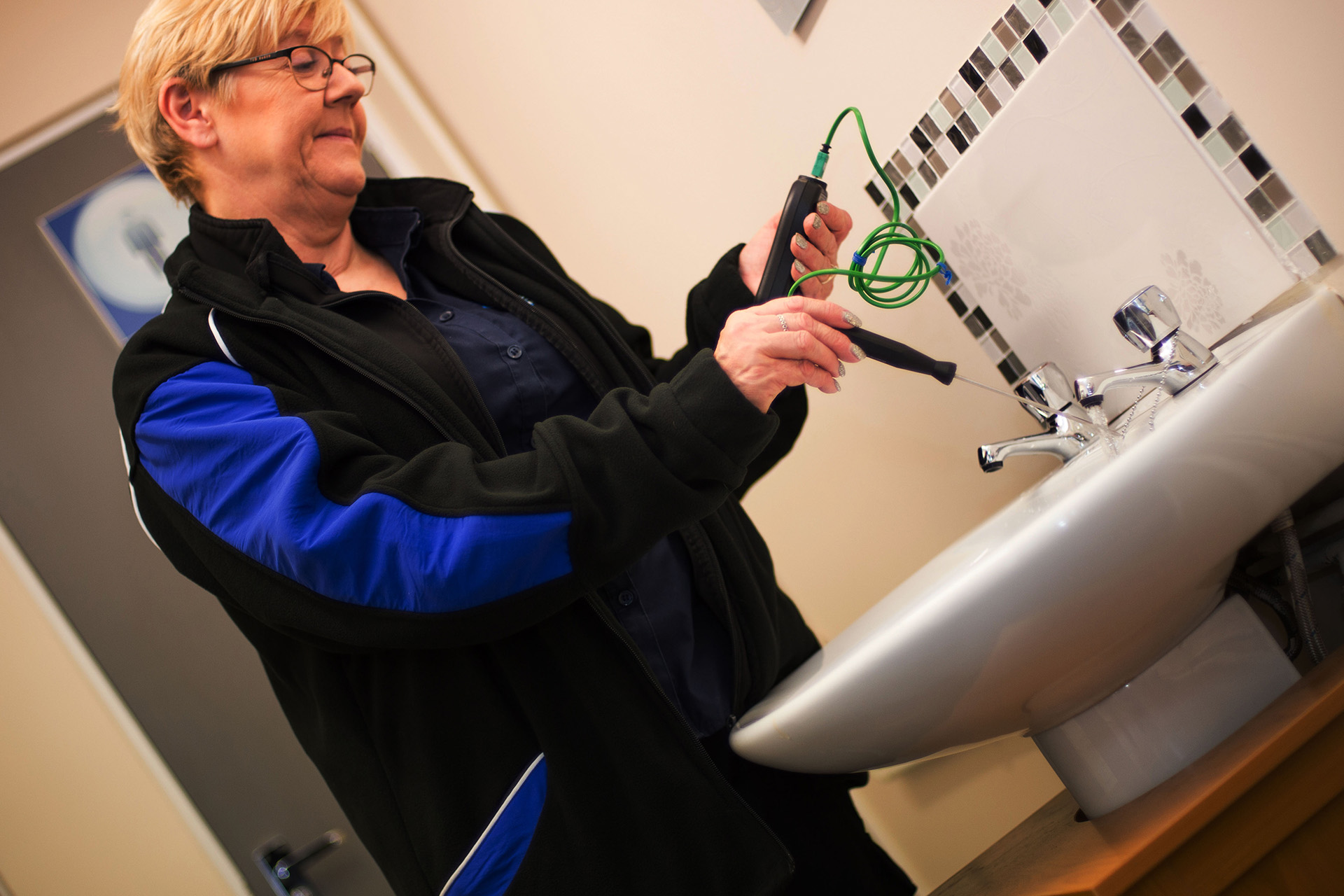
Our services include Legionella risk assessments, water sampling and testing, system cleaning and disinfection, temperature monitoring and Legionella monitoring, and compliance support. We also deliver remedial plumbing work and ongoing consultancy to help organisations maintain safe and compliant water systems.
Is It For You?
Our water hygiene services support organisations responsible for the safe management of building water systems.
You may require water hygiene services if you need:
- A Legionella risk assessment for your premises
- Ongoing monitoring and compliance support for hot and cold-water systems
- Water sampling and laboratory testing for Legionella bacteria
- Cleaning and disinfection of tanks, pipework or outlets
- TMV servicing and maintenance
- System flushing programmes for low use outlets
- Remedial plumbing work to correct system design or maintenance issues
- Training or consultancy for staff responsible for water hygiene management
Water Hygiene
Ensuring Clean Water Systems
SAS Water provide a comprehensive range of water hygiene services designed to support the safe management of workplace water systems. Our work covers the assessment, monitoring and control of Legionella risk in line with ACOP L8, HSG 274, and HSG 282 guidance.
Our services include Legionella risk assessments, water sampling and testing, system cleaning and disinfection, temperature monitoring and Legionella monitoring, and compliance support. We also deliver remedial plumbing work and ongoing consultancy to help organisations maintain safe and compliant water systems.
Is It For You?
Our water hygiene services support organisations responsible for the safe management of building water systems.
You may require water hygiene services if you need:
- A Legionella risk assessment for your premises
- Ongoing monitoring and compliance support for hot and cold-water systems
- Water sampling and laboratory testing for Legionella bacteria
- Cleaning and disinfection of tanks, pipework or outlets
- TMV servicing and maintenance
- System flushing programmes for low use outlets
- Remedial plumbing work to correct system design or maintenance issues
- Training or consultancy for staff responsible for water hygiene management
What We Offer
Click a Water Management Solution
Legionella Risk Assessments
A Legionella risk assessment identifies and evaluates the potential for Legionella bacteria to develop within a building’s water system. It forms the foundation of an effective water hygiene management programme and is a legal requirement for many workplaces.
Our expert assessors conduct detailed inspections of hot and cold-water systems to determine risk levels and identify any conditions that could allow Legionella bacteria to proliferate.
How The Process Works
- Site Survey: A full inspection of the property’s water systems including storage tanks, pipework, calorifiers, outlets and associated plant.
- System Mapping: Identification of water system layout, usage patterns and areas where stagnation, scale or biofilm may occur.
- Risk Evaluation: Assessment of factors such as water temperature control, system design, stored water conditions and maintenance history.
- Control Measure Review: Evaluation of existing water hygiene management procedures and monitoring regimes.
- Report and Recommendations – A detailed report outlining risk levels, recommended control measures and any remedial actions required.
Compliance Standards
Legionella risk assessments are carried out in accordance with:
- Health and Safety at Work etc. Act 1974
- ACOP L8: The control of Legionella bacteria in water systems
- HSG274 Parts 2 and 3
- HSG 282
- BS 8580-1:2019
- BS 8580-2:2022
- HTM 04-01 in healthcare environments
Monitoring & Compliance Support
Ongoing monitoring ensures water systems remain within safe operational limits and that control measures remain effective.
Our water hygiene monitoring programmes provide structured inspections and testing to support organisations in maintaining compliance with Legionella control guidance.
How The Process Works
- Monitoring Schedule Development: A monitoring programme is created based on system type, risk level and building use.
- Flushing of Infrequently Used Outlets: Monitored by usage patterns within the building
- Routine Inspections: Regular checks of water temperatures, outlets, tanks, calorifiers, expansion vessels, and associated equipment.
- System Condition Checks: Identification of scale, corrosion, stagnation or biofilm within the system. Cleaning, Descaling, and Disinfecting where appropriate.
- Documentation and Reporting: Monitoring results are recorded and maintained as part of the site’s compliance documentation using digital logbooks.
- Corrective Action Guidance: Where deviations occur, recommendations are provided to restore control conditions.
Compliance Standards
Monitoring programmes follow guidance within:
- ACOP L8
- HSG274 Part 2 for hot and cold-water systems
- HSG 274 Part 3 Other Risk System
- HSG 282 used in spa-pool systems
- HTM 04-01 in healthcare environments
- BS 8680:2020
- BS 8558:2015
Cleaning & Disinfecting
Cleaning and disinfection removes contamination, biofilm, sediment and microbial growth from water systems. This process may be required following installation, system modification, contamination events or as part of routine water hygiene management. Pre-commission cleaning services are also carried out to ensure new systems are thoroughly cleaned and safe prior to operation.
How The Process Works
- System Assessment: Identification of the affected system components and level of contamination.
- Preparation and Isolation: Sections of the water system are isolated to allow controlled treatment.
- Chemical Disinfection: Approved disinfectant solutions are introduced to eliminate bacteria and microorganisms.
- Flushing and Neutralisation: Systems are flushed to remove disinfectant residues and contaminants.
- Verification Sampling: Water samples may be taken to confirm the effectiveness of the disinfection process.
Compliance Standards
Cleaning and disinfection procedures are conducted in line with:
- HSG274 Part 2
- HSG282
- ACOP L8
- BS 8558:2015
- PD 855468:2015
TMV Servicing & Maintenance
Thermostatic Mixing Valves regulate water temperature to prevent scalding while maintaining safe operating conditions within water systems.
Routine servicing ensures valves remain operational and hygienic, preventing scale build-up and ensuring accurate temperature control. We also install and manage Type 2 and Type 3 TMVs, including the replacement of failed units to maintain safe and compliant performance.
How The Process Works
- Valve Inspection: Examination of valve condition and operational performance.
- Temperature Verification: Checking mixed water temperatures at outlets.
- Component Cleaning: Removal of scale, debris and deposits within the valve body.
- Calibration and Adjustment: Ensuring temperature settings meet required safety limits.
- Service Records: Maintenance results recorded for compliance documentation.
Compliance Standards
TMV servicing follows guidance from:
- HSG274 Part 2
- HTM 04-01 in healthcare environments
- Manufacturer servicing recommendation
Water Sampling & Testing
Water sampling provides laboratory analysis of water quality and the presence of microbiological contamination including Legionella bacteria.
Sampling programmes provide evidence that control measures are working effectively and help identify issues before they develop into operational risks.
How The Process Works
- Sampling Plan Development: Identification of sampling locations based on risk assessment or deviations found in routine monitoring tasks.
- Sample Collection: Water samples collected using sterile procedures to prevent contamination.
- Laboratory Analysis: Samples are analysed by UKAS-accredited laboratories.
- Result Interpretation: Results are reviewed against recognised guidance thresholds by a competent analyst.
- Corrective Action Recommendations: Where elevated results are identified, remedial actions are provided by a qualified advisor.
Compliance Standards
Sampling programmes align with:
- ACOP L8
- HSG274
- BS 7592:2022
Training & Consultancy
Training and consultancy services provide organisations with the knowledge required to manage water hygiene responsibilities effectively.
This supports staff responsible for maintaining water systems and ensures appropriate procedures are followed.
How The Process Works
- Training Needs Assessment: Identification of staff roles involved in water hygiene management.
- Technical Training Delivery: Training covering Legionella awareness, monitoring procedures and compliance responsibilities.
- Management Guidance: Advice on implementing effective water safety management systems.
- Control Scheme Development: Support in developing monitoring schedules and management documentation.
- Ongoing Consultancy: Specialist advice to support compliance and operational decision making.
Compliance Standards
Training programmes reflect requirements outlined in:
- Health and Safety at Work etc. Act 1974
- Management of Health and Safety at Work Regulations 1999
- COSHH
- ACOP L8: The control of Legionella bacteria in water systems
- HSG274 Parts 2 and 3
- HSG 282
- BS 8580-1:2019
- BS 8580-2:2022
- HTM 04-01 in healthcare environments
Remedial Plumbing Work
Where water systems contain design faults or deteriorated components, remedial plumbing work may be required to restore compliance.
This may include replacing pipework, modifying system layouts or installing improved control measures.
How The Process Works
- Identification of System Defects: Issues identified during risk assessment or routine monitoring.
- Engineering Evaluation: Determination of corrective work required.
- System Modification or Repair: Replacement or modification of pipework, tanks or outlets.
- Re-testing and Verification: System performance checked following remedial work.
- Compliance Documentation: Records updated to reflect system changes.
Compliance Standards
Remedial work is undertaken in accordance with:
- ACOP L8
- HSG 274
- HSG 282
- Water Supply regulations where applicable
Digital/IoT Services
Digital monitoring systems allow water system performance to be tracked continuously using sensor technology.
These systems provide real time data on temperature, system usage and flow conditions which can help identify risks before they escalate.
How The Process Works
- System Survey: Identification of suitable monitoring locations.
- Sensor Installation: Temperature or flow sensors installed on pipework and outlets.
- Data Monitoring: System conditions monitored remotely.
- Alert Generation: Alerts triggered if temperatures or system conditions move outside control limits.
- Data Reporting: Monitoring data used to support compliance documentation and system management.
Compliance Standards
Remote monitoring supports compliance with:
- ACOP L8
- HSG274
Water Softeners
Water softeners treat hard water by reducing harmful mineral levels, preventing scale formation, corrosion, and blockages in pipework and appliances.
Properly maintained softeners protect system efficiency and extend the lifespan of heating, cooling, and domestic water systems.
How The Process Works
- System Assessment: Evaluation of water hardness and suitability of softener installation.
- Installation & Configuration: Water softeners installed and set to required specifications.
- Routine Servicing: Annual servicing and maintenance carried out to ensure optimal performance.
- Monitoring & Adjustment: Water quality monitored, and softener settings adjusted if necessary to maintain consistent performance.
Compliance Standards
Water softeners support guidance for:
- ACOP L8
- HSG 274
Chemical Dosing Units
Controlled chemical dosing units maintain water quality across water systems, preventing scale, corrosion, and microbial growth while improving efficiency and extending system lifespan, helping to reduce long-term operational costs.
These systems can be used with a range of treatment methods, including chlorine dioxide, copper, silver, or hydrogen peroxide dosing.
How The Process Works
- Assessment: Identify water treatment requirements and appropriate dosing locations.
- Installation: Units installed and calibrated for precise chemical dosing.
- Monitoring: Ongoing checks to ensure effectiveness and system safety.
- Servicing & Support: Servicing, chemical supply and top up, fault diagnosis, call out, and repair to most systems.
Compliance Standards
Chemical dosing units support guidance for:
- ACOP L8
- COSHH
- HSG 274
Let SAS Water Handle It
4 Steps Away From Reliable Water Management

Book a Consultation
Schedule a consultation with our team to discuss your water hygiene and compliance requirements.

Discuss Your Needs
We assess your site, systems, and risks to define tailored water management requirements.

Accept a Quote
Receive a clear, structured proposal, outlining services, compliance scope, and ongoing water management support.

Let SAS Water Handle It
Our team delivers a fully managed service, ensuring safe, compliant, and efficient water system operation.
Let SAS Water Handle It
4 Steps Away From Reliable Water Management
Book a Consultation
Schedule a consultation with our team to discuss your water hygiene and compliance requirements.
Discuss Your Needs
We assess your site, systems, and risks to define tailored water management requirements.
Accept a Quote
Receive a clear, structured proposal, outlining services, compliance scope, and ongoing water management support.
Let SAS Water Handle It
Our team delivers a fully managed service, ensuring safe, compliant, and efficient water system operation.
Related Services
We Manage Water From A To Z

Water Treatment
Closed heating and cooling systems require careful chemical management to maintain performance and prevent internal damage. Our treatment programmes include system analysis, inhibitor dosing, and ongoing condition monitoring to control corrosion, scale formation, and microbiological contamination. Maintaining balanced water chemistry protects mechanical infrastructure while supporting long-term operational efficiency.

Water Regulation Compliance
Backflow prevention is a legal requirement under the Water Supply (Water Fittings) Regulations 1999, ensuring that contaminated water cannot enter the public mains supply. SAS Water provides specialist installation, inspection, and servicing of WRAS-approved Reduced Pressure Zone (RPZ) valves, helping organisations maintain safe potable water supplies and meet regulatory obligations.
Related Services
We Manage Water From A To Z
Water Treatment
Closed heating and cooling systems require careful chemical management to maintain performance and prevent internal damage. Our treatment programmes include system analysis, inhibitor dosing, and ongoing condition monitoring to control corrosion, scale formation, and microbiological contamination. Maintaining balanced water chemistry protects mechanical infrastructure while supporting long-term operational efficiency.
Water Regulation Compliance
Backflow prevention is a legal requirement under the Water Supply (Water Fittings) Regulations 1999, ensuring that contaminated water cannot enter the public mains supply. SAS Water provides specialist installation, inspection, and servicing of WRAS-approved Reduced Pressure Zone (RPZ) valves, helping organisations maintain safe potable water supplies and meet regulatory obligations.